
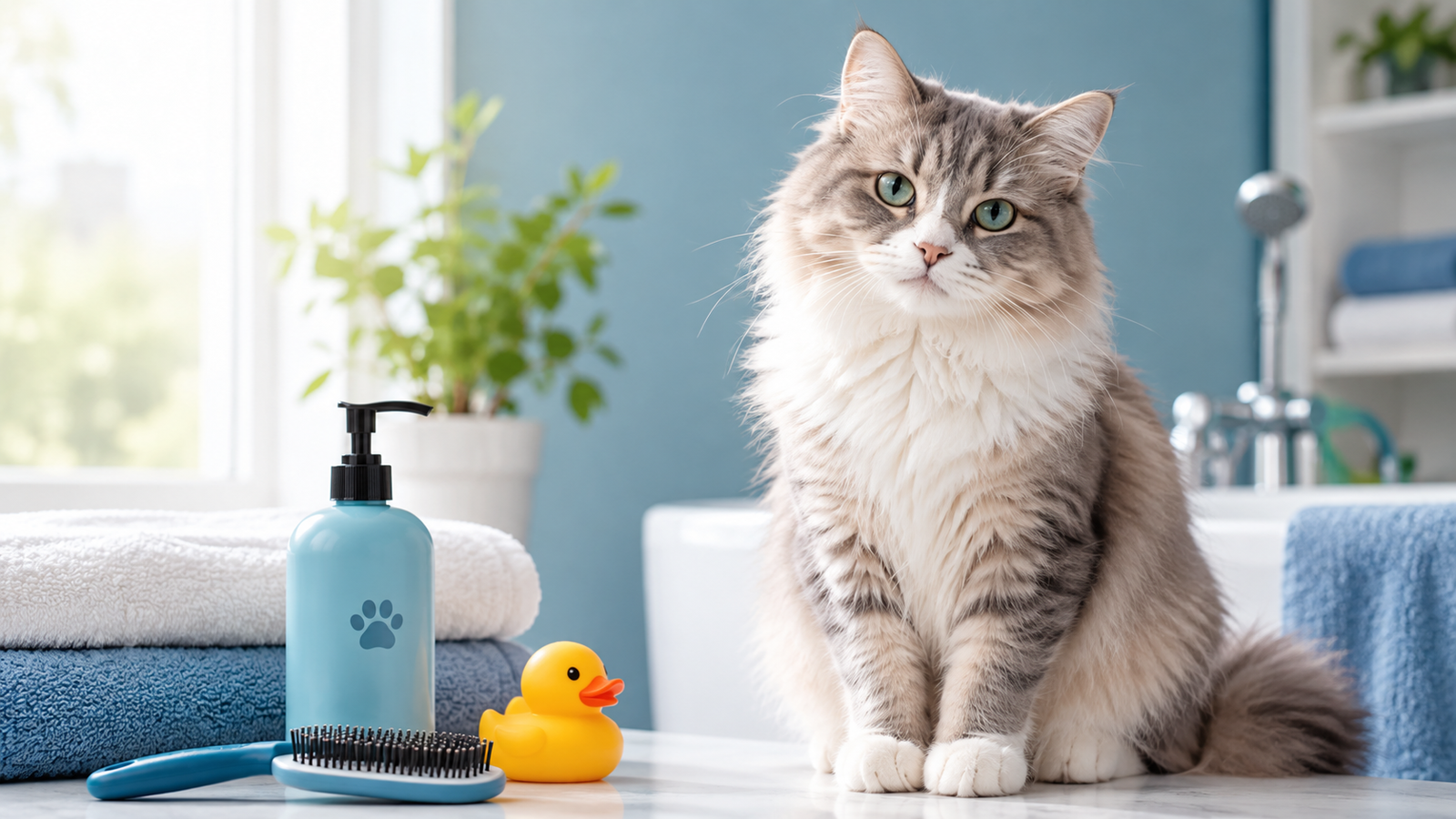
Cat Grooming Guide
How many times should you give your cat a bath?
Most healthy cats rarely need a bath because regular self-grooming keeps their coat and skin in good condition. The right bathing frequency depends on your cat’s health, coat, lifestyle, and ability to groom—not on a universal calendar.
Quick Answer
For many healthy cats, bathing is occasional rather than routine. A bath may be appropriate when your cat gets into something harmful or sticky, has a medical condition that requires a veterinarian-recommended wash, or cannot groom effectively. Indoor cats often need fewer baths than cats that spend time outside, while long-haired, senior, or overweight cats may need extra grooming support. Ask your veterinarian for individualized advice if bathing is becoming frequent or difficult.
How Often Do Cats Need Baths?
There is no fixed bathing schedule that is right for every cat. A healthy cat with a short coat, normal mobility, and good grooming habits may go its entire life with only rare baths. Other cats may need a wash from time to time, or a carefully planned routine as part of treatment for a skin problem.
Think of bathing as one grooming tool, not a routine requirement. Brush your cat, check the coat and skin, and try spot cleaning before deciding on a full bath. Recurring odor, a greasy coat, flakes, hair loss, itching, or frequent matting may point to a problem that needs more than washing.
| Cat or lifestyle factor | What it may mean | Helpful approach |
|---|---|---|
| Healthy indoor, short-haired cat | Often needs little or no routine bathing | Regular observation, occasional brushing, and spot cleaning |
| Outdoor access | More opportunities to pick up dirt or substances | Check the coat after outings and bathe only when needed |
| Long or dense coat | More prone to mats and trapped debris | Consistent brushing; professional or veterinary grooming when needed |
| Senior, overweight, or less mobile cat | May struggle to reach and clean parts of the body | Gentle daily checks and a veterinarian-guided grooming plan |
Why Most Cats Do Not Need Frequent Baths
Cats are efficient self-groomers. Their tongues, paws, and natural grooming behavior help remove loose hair and ordinary surface dirt. Frequent unnecessary bathing can remove oils that help support the skin and coat, dry or irritate sensitive skin, and create stress. It can also turn a simple grooming task into a struggle that makes future handling harder.
Bathing does not replace brushing, parasite prevention, veterinary care, or treatment for a skin disease. If you must bathe your cat repeatedly to control odor, oil, or debris, schedule a veterinary appointment rather than increasing the frequency on your own.
When a Cat May Need a Bath
A bath can be useful in specific situations:
- Something unsafe is on the coat. Grease, chemicals, paint, essential oils, or other substances can be dangerous if licked off. Contact a veterinarian or animal poison service promptly for substance-specific instructions; do not wait if your cat may have been exposed to a toxic product.
- The coat is heavily soiled. Diarrhea, urine, feces, mud, or another substance may require cleaning when spot cleaning is not enough.
- A veterinarian recommends medicated bathing. Some skin conditions are managed with a particular shampoo and frequency. Follow the product instructions and your veterinary team’s directions closely.
- The cat cannot groom well. Pain, limited flexibility, obesity, illness, or advanced age can leave parts of the coat dirty or matted.
When a substance may be poisonous, avoid guessing about the safest product. A professional can tell you whether rinsing, bathing, or another response is appropriate.
Indoor vs. Outdoor Cats
Indoor cats generally encounter less mud, plant material, grease, and other outdoor debris, so they often need fewer full baths. That does not mean an indoor cat never needs one: spills, litter accidents, illness, or a prescribed treatment can still make bathing necessary.
Outdoor cats have more chances to get dirty or contact irritants. Check the coat after outdoor time, especially around the paws, belly, and tail. Remove small amounts of loose dirt with brushing or a damp cloth when safe. For chemicals, sticky material, wounds, parasite concerns, or persistent skin changes, get professional advice.
Long-Haired Cats
Long-haired cats do not automatically need frequent baths. They usually need more consistent brushing because their coats can tangle, mat, and hold debris. A mat close to the skin can be painful and can conceal irritated or infected skin.
Do not cut out tight mats with household scissors; cat skin can be pulled up into a mat and is easy to injure. A veterinarian or experienced professional groomer can safely handle severe matting. Establish a calm brushing routine early, using short sessions and rewards. Bathing a matted coat can make mats tighter, so address mats before putting your cat in water unless a veterinary professional directs otherwise.
Senior or Overweight Cats That Struggle to Groom
Older or overweight cats may have trouble reaching the back, hindquarters, or tail. Arthritis, dental pain, and other medical conditions can also change grooming behavior. A dirty or greasy coat may mean your cat needs help or an examination.
Start with gentle daily checks and targeted cleaning. Ask your veterinarian whether bathing is suitable and whether pain, weight, mobility, or skin disease should be addressed first. A professional groomer who is experienced with cats may be safer than attempting to restrain a distressed cat at home.
Safe Bathing Steps
- Prepare first. Gather cat shampoo, several towels, a nonslip mat, a cup or gentle sprayer, and treats. Keep the room warm and close doors and windows that could create a draft.
- Brush before water. Remove loose hair and manageable tangles. Do not force out painful mats.
- Use shallow, lukewarm water. Support your cat securely without squeezing. Keep water away from the eyes, ears, nose, and mouth.
- Wet and wash gradually. Begin at the shoulders and work toward the body. Use a small amount of shampoo and follow its label directions. Speak quietly and keep the session brief.
- Rinse thoroughly. Leftover shampoo can irritate skin and may be swallowed during grooming. Rinse until the water runs clear and no slippery residue remains.
- Dry gently. Wrap your cat in a towel and pat rather than rub vigorously. Keep your cat warm until fully dry. Avoid a hair dryer unless your cat calmly tolerates it and the appliance can be used safely at a low, comfortable setting.
Stop if your cat shows escalating fear or aggression. A panicked cat can injure itself or the person bathing it. It is better to pause and call a veterinary clinic or cat-experienced groomer than to force the process.
Cat Shampoo Guidance
Use a shampoo labeled for cats, ideally one recommended by your veterinarian when there is a skin concern. Cats groom themselves after a bath, so products must be appropriate for feline use and rinsed away completely. Read the label for dilution, contact time, and rinsing instructions.
Do not substitute human shampoo, dish soap, dog flea shampoo, or household cleaners unless a veterinarian specifically directs you to use a particular product. Some ingredients and concentrated essential oils can be harmful to cats. Never apply a dog flea product containing permethrin to a cat; ask a veterinarian to recommend safe parasite control.
What Not to Do
- Do not bathe your cat on a rigid schedule just because a calendar says it is time.
- Do not use hot water, strong water pressure, or forceful restraint.
- Do not pour water into the ears or scrub the face with shampoo.
- Do not use human, dog, or household products without veterinary guidance.
- Do not shave, cut mats, or treat suspected poisoning without appropriate professional advice.
- Do not continue a bath if your cat is panicking, overheating, or struggling to breathe.
Making Bath Time Less Stressful
Make grooming predictable. Practice brief handling of the paws, legs, and coat when your cat is relaxed, then reward calm behavior. Let your cat investigate the empty tub or sink before a bath. Use a nonslip surface and minimize noise.
Choose a time when your cat is calm rather than excited or already frightened. Work in short stages and take breaks when possible. For cats that cannot tolerate bathing, ask about alternatives such as spot cleaning, regular brushing, a professional groom, or a different medically appropriate treatment.
When to Contact a Veterinarian
Contact your veterinarian if your cat has persistent odor, itching, redness, scabs, hair loss, open sores, recurring mats, excessive oil, or a sudden change in grooming. A cat that stops grooming may be sick or painful. Seek prompt advice after possible exposure to chemicals, medications, essential oils, or other toxic substances.
A veterinarian can identify the cause of coat changes, prescribe a suitable medicated product when needed, and help you decide whether home bathing is safe. Seek urgent care for breathing difficulty, collapse, severe weakness, seizures, or a known poisoning.
Frequently Asked Questions
Weekly bathing is not appropriate for most healthy cats unless your veterinarian has recommended it for a specific condition. Frequent washing can irritate the skin and add unnecessary stress.
Some indoor cats may never need a routine bath. An indoor cat may still need one after an accident, contamination, heavy soiling, or veterinary treatment. Regular observation and brushing are usually more useful than scheduled bathing.
There is no universal interval. Focus on frequent, gentle brushing and address mats or skin changes promptly. Bathe only when cleaning is needed or a veterinarian recommends a treatment plan.
It is safer to use a product made and labeled for cats. Ask your veterinarian before using any alternative shampoo, especially if your cat has irritated skin or may lick the residue.
Do not force a panicked cat. Try gradual handling practice, spot cleaning, or help from a cat-experienced groomer or veterinary team. Some cats need a different cleaning method or medical evaluation.
Key Takeaway
How many times should you give your cat a bath? As often as your individual cat genuinely needs one, which for many healthy cats is rarely. Consider the coat, lifestyle, age, mobility, and health history. Use cat-specific products, keep baths gentle and brief, and involve a veterinarian when bathing is frequent, medically necessary, or difficult to do safely.
Leave a Reply